Best CRM Software for Small Businesses in 2026
Best CRM Software for Small Businesses in 2026

Managing customer relationships becomes increasingly difficult as your business grows.
Spreadsheets, sticky notes, and scattered customer information might work in the beginning, but eventually you'll need a dedicated CRM (Customer Relationship Management) system to keep track of leads, customers, deals, and follow-ups.
The right CRM can help you close more sales, improve customer relationships, automate repetitive tasks, and keep your team organized.
In this guide, we'll look at the best CRM software for small businesses in 2026 and help you choose the right platform for your needs.
Quick Verdict
Best Overall CRM: HubSpot CRM
Best CRM for Sales Teams: Pipedrive
Best CRM for Simplicity: Folk
Best CRM for Automation: ActiveCampaign
Best CRM for Growing Businesses: Zoho CRM
🎥 Watch the Full Video Review
[Embed Your YouTube Video Here]
Comparison Table
CRM | Best For | Free Plan | Starting Price |
|---|---|---|---|
HubSpot CRM | Small businesses & startups | Yes | Free / Paid plans available |
Pipedrive | Sales teams | No | Paid plans |
Folk | Relationship management | Limited | Paid plans |
Zoho CRM | Growing businesses | Yes | Paid plans available |
ActiveCampaign | Sales & marketing automation | No | Paid plans |
1. HubSpot CRM
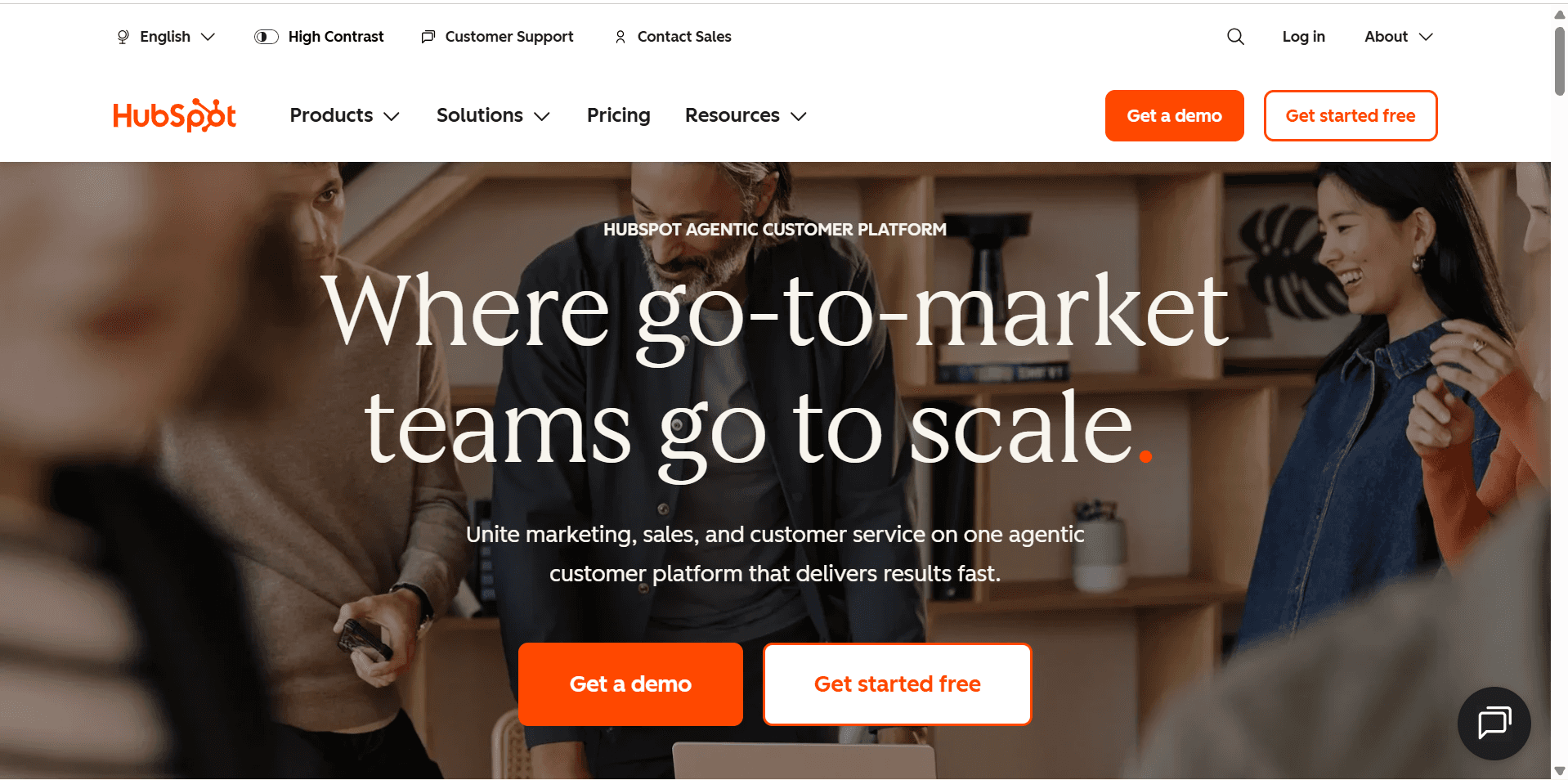
Best Overall CRM for Small Businesses
HubSpot CRM is one of the most popular CRM platforms available today, and for good reason.
It combines contact management, sales pipelines, email tracking, marketing tools, and customer support features into one platform.
Key Features
Contact management
Sales pipeline tracking
Email tracking
Meeting scheduling
Lead management
Reporting dashboards
Marketing tools
Pros
Generous free plan
Easy to use
Excellent user interface
Scales with your business
Large ecosystem of tools
Cons
Advanced features require paid plans
Costs can increase as your business grows
Best For
Small businesses looking for an all-in-one CRM that can grow alongside them.
2. Pipedrive
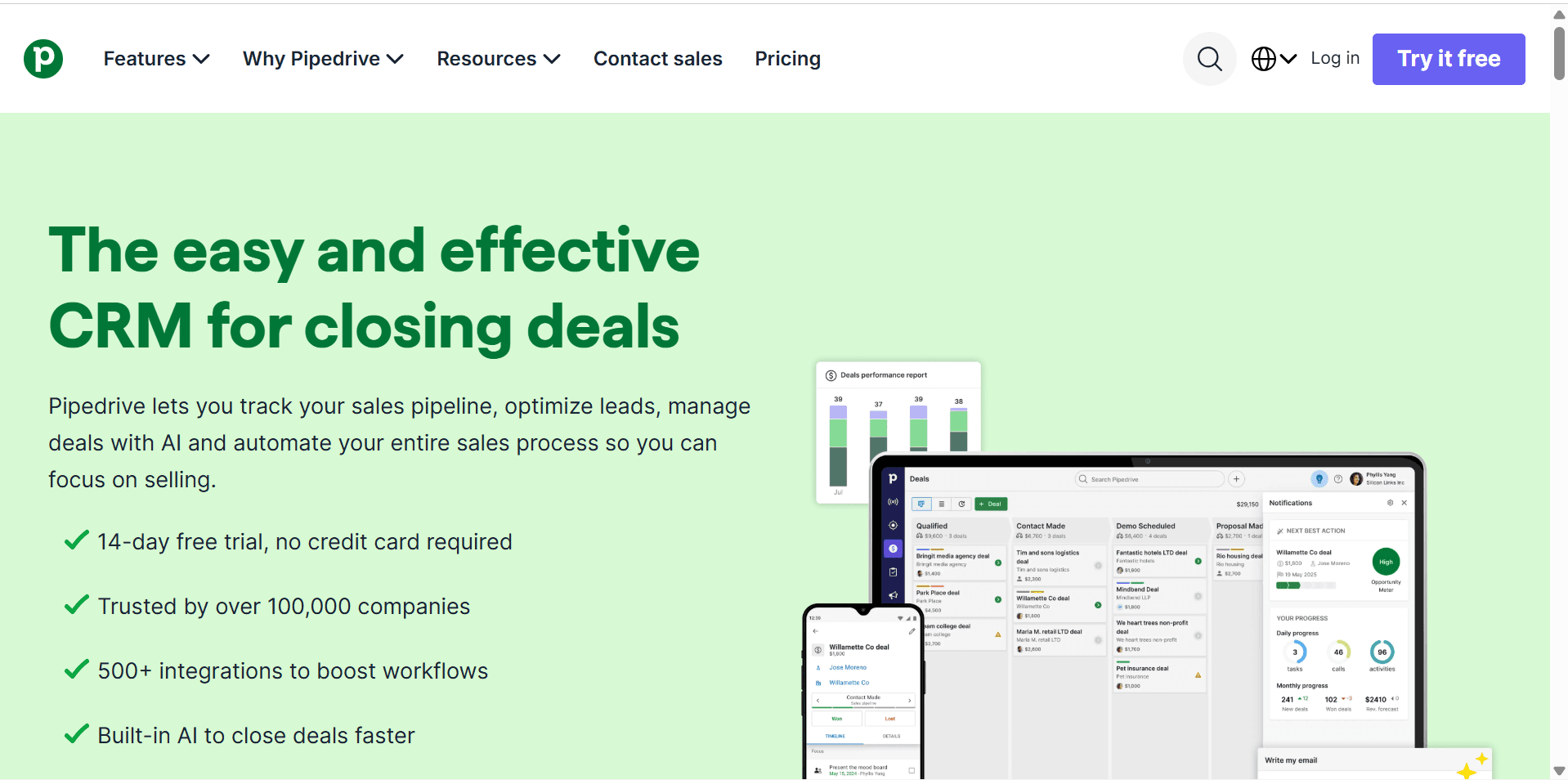
Best CRM for Sales Teams
Pipedrive is designed specifically for sales-focused businesses.
Its visual sales pipeline makes it easy to track deals and see exactly where prospects are in your sales process.
Key Features
Visual pipelines
Deal tracking
Activity reminders
Sales reporting
Workflow automation
Email integration
Pros
Excellent sales management
Simple interface
Strong automation features
Easy to track opportunities
Cons
Limited free options
Fewer marketing features than HubSpot
Best For
Businesses that want a CRM focused primarily on closing deals.
3. Folk
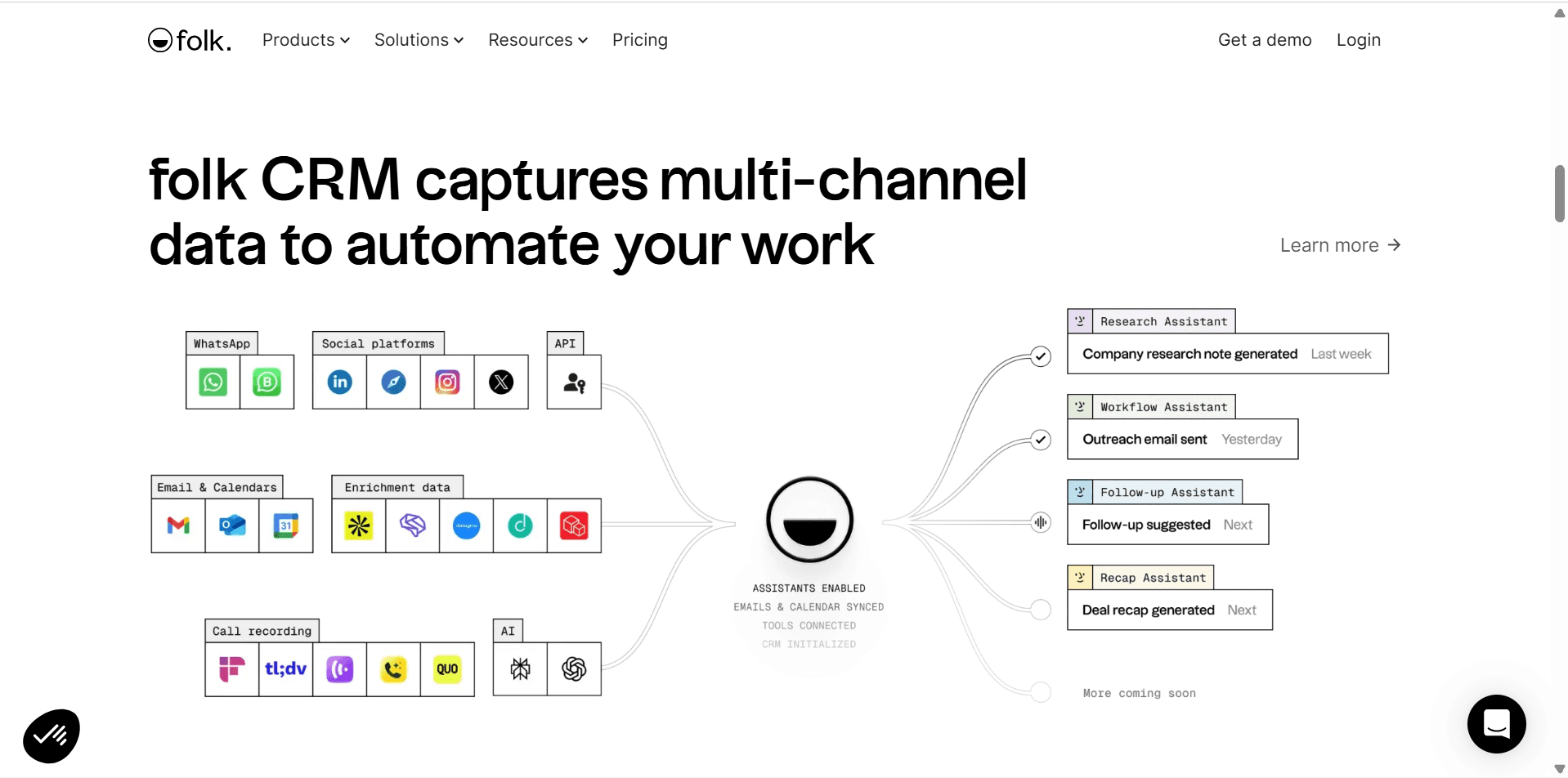
Best CRM for Relationship Management
Folk takes a modern approach to CRM by focusing on relationships rather than complicated sales processes.
It's particularly useful for consultants, agencies, freelancers, and networking-focused businesses.
Key Features
Contact management
Relationship tracking
Shared team contacts
Email integration
Collaboration tools
Pros
Simple and modern design
Easy to manage contacts
Great for relationship-based businesses
Quick setup
Cons
Less advanced than enterprise CRMs
Smaller feature set
Best For
Freelancers, consultants, agencies, and businesses focused on relationship building.
4. Zoho CRM
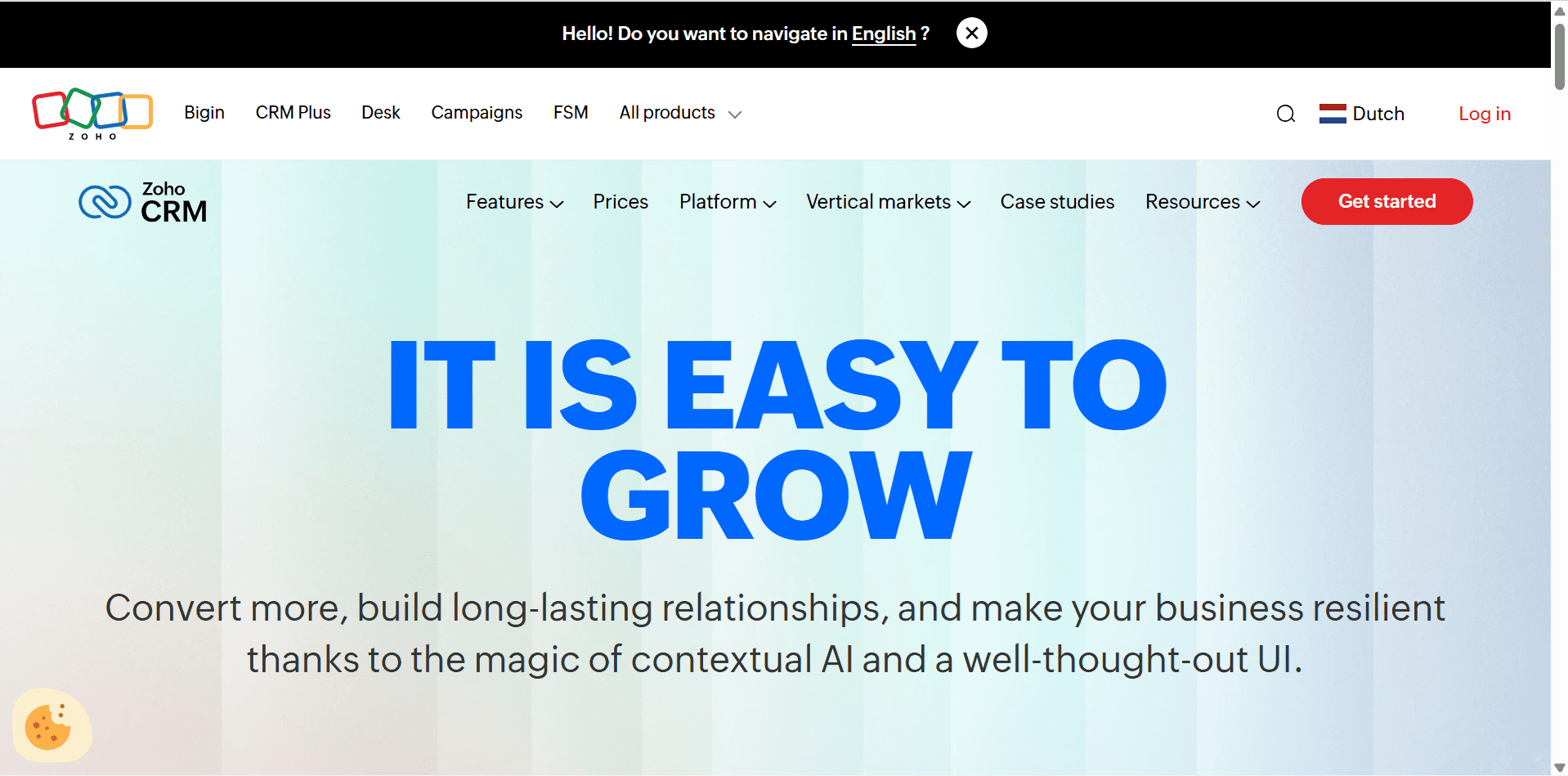
Best CRM for Growing Businesses
Zoho CRM offers a wide range of features at competitive pricing.
It includes sales automation, lead scoring, analytics, and workflow management tools.
Key Features
Lead management
Workflow automation
Sales forecasting
Email marketing integrations
Reporting dashboards
Pros
Affordable pricing
Extensive feature set
Good automation capabilities
Scalable platform
Cons
Interface can feel overwhelming
Learning curve for new users
Best For
Businesses that need more advanced functionality without enterprise-level pricing.
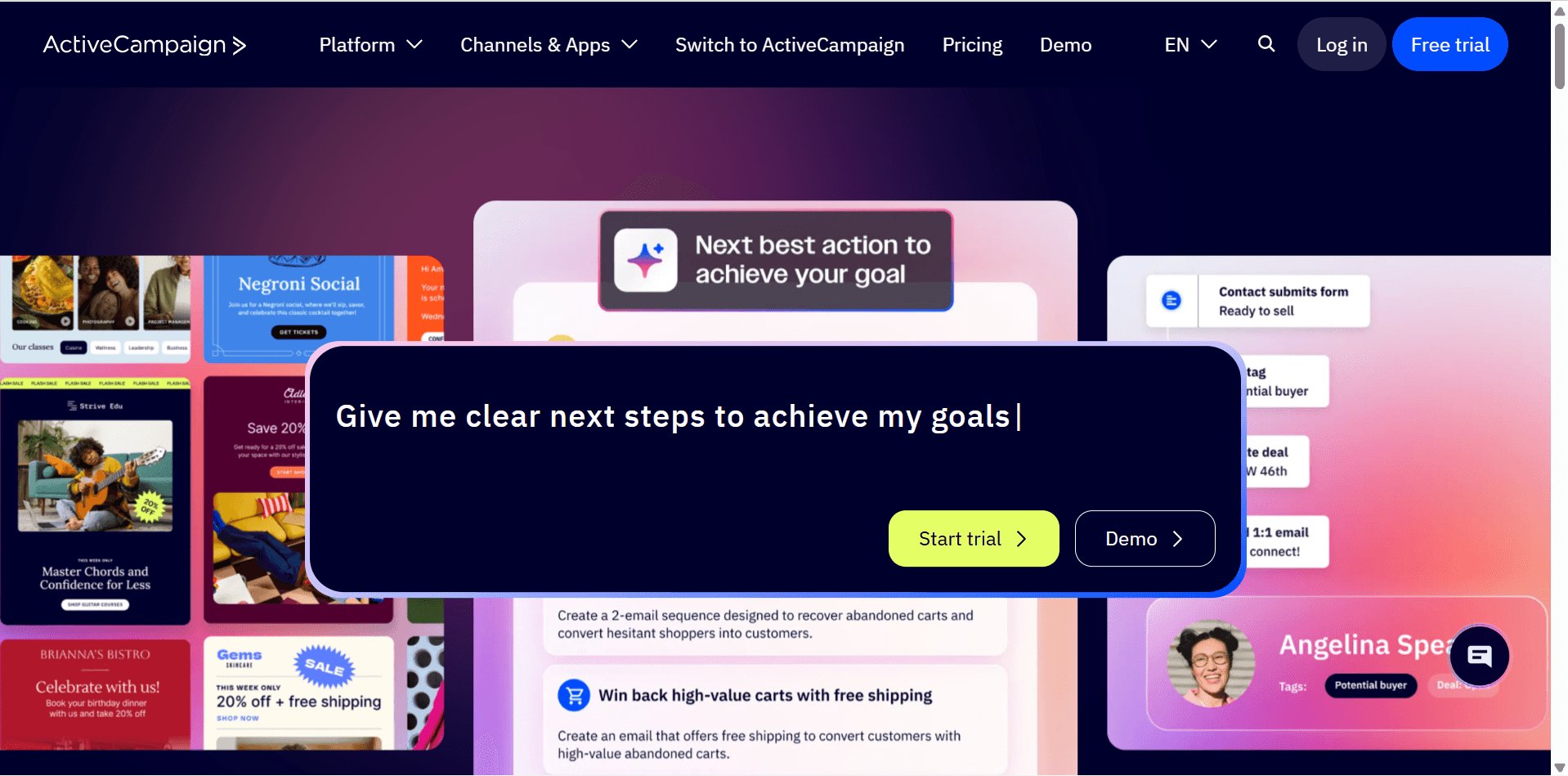
5. ActiveCampaign
Best CRM for Marketing Automation
ActiveCampaign combines CRM functionality with powerful email marketing and automation tools.
If lead nurturing and email automation are critical to your business, ActiveCampaign is worth considering.
Key Features
CRM
Email marketing
Marketing automation
Lead scoring
Customer journeys
Sales automation
Pros
Excellent automation tools
Strong email marketing capabilities
Powerful workflows
Great segmentation options
Cons
More complex than basic CRMs
Learning curve for beginners
Best For
Businesses that rely heavily on email marketing and automated follow-up sequences.
How to Choose the Right CRM
When evaluating CRM software, consider:
Ease of Use
A CRM should make your work easier, not more complicated.
Scalability
Choose a platform that can grow with your business.
Automation
Look for features that reduce manual work and improve efficiency.
Integrations
Ensure the CRM works with the tools you already use.
Budget
Factor in both current and future costs as your team expands.
Which CRM Should You Choose?
Choose HubSpot CRM if you want the best all-around solution.
Choose Pipedrive if your focus is sales pipeline management.
Choose Folk if you prioritize relationship management and networking.
Choose Zoho CRM if you want advanced features at a competitive price.
Choose ActiveCampaign if email marketing and automation are central to your business.
Final Verdict
For most small businesses, HubSpot CRM remains the strongest overall choice thanks to its ease of use, generous free plan, and ability to scale as your business grows.
However, every business has different needs.
The best CRM is ultimately the one that fits your workflow, budget, and growth goals.
The good news is that most CRM platforms offer free trials or free plans, allowing you to test them before committing.
Frequently Asked Questions
What is the best CRM for small businesses?
HubSpot CRM is often considered the best overall CRM for small businesses due to its free plan, ease of use, and extensive feature set.
Do small businesses need a CRM?
Yes. A CRM helps organize contacts, track leads, manage sales opportunities, and improve customer relationships.
Which CRM is easiest to use?
HubSpot CRM and Folk are generally considered among the easiest CRM platforms for beginners.
What is the best free CRM?
HubSpot CRM offers one of the most generous free CRM plans available.
Related Articles
HubSpot CRM Review
Pipedrive Review
Folk CRM Review
Best Email Marketing Software for Small Businesses
Best Project Management Software for Small Businesses


